NASA's critical research infrastructure connecting the global space and Earth science ecosystem faces budget cuts that threaten mission data discovery and research collaboration worldwide.
Hear directly from researchers about how NASA's ADS/SciX has transformed their work and why continued funding is critical for the global scientific community.
The President's FY2026 Budget Request to Congress reduces funding to the Smithsonian's Astrophysical Observatory's Astrophysics Data System (ADS) and eliminates SAO's Science Explorer (SciX). For over three decades, ADS has helped the astrophysics research community access research articles and datasets, find collaborators, and better understand the impact of their work.
The sunsetting of ADS/SciX could cede the country's global leadership in space and astronomy research, impacting universities and research centers around the world. This system enables discovery and reuse of NASA mission and research outputs across all Earth and space sciences.
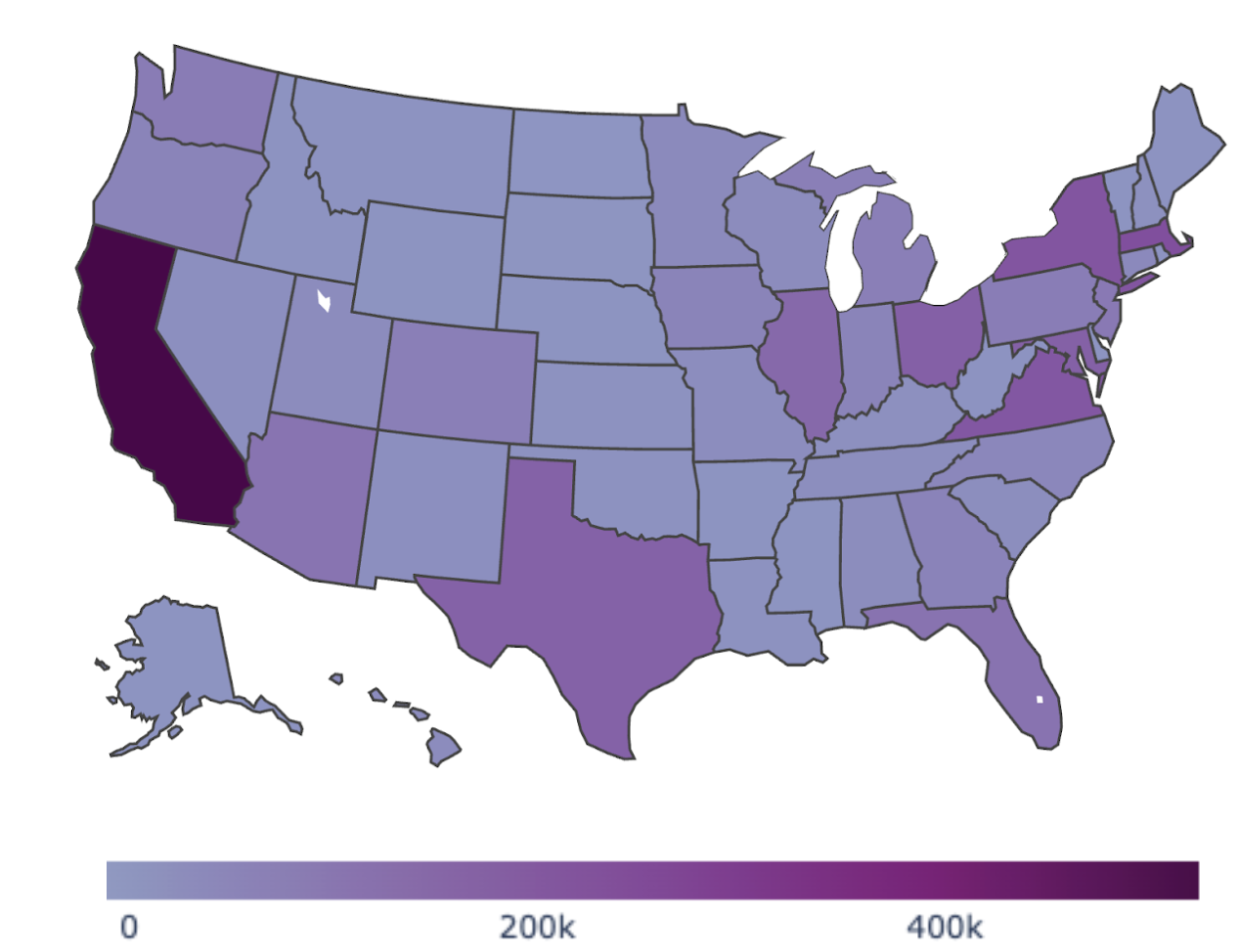
ADS Usage (sessions) by state (January - July 2025)
The Astrophysics Data System (ADS) is a literature-based, open information system that has been used by researchers for over 30 years to keep up with research in astronomy and astrophysics.
The Science Explorer (SciX) represents the expansion of the Astrophysics Data System to all NASA-funded research areas in the Earth and space sciences. In addition to its bibliographic corpus of over 30M records, SciX includes research datasets and software, tracks their citations and usage, and provides unique search and evaluation capabilities.
Expert curation and publisher partnerships providing full-text access for enhanced discovery across Earth and space sciences.
ADS/SciX connects the full NASA space and Earth science ecosystem, linking mission data, research outputs, and software across all NASA science divisions and global partnerships.
Critical infrastructure for discovering and accessing data from NASA missions like Hubble, Webb, Kepler, TESS, and Earth observation satellites, maximizing scientific return on investment.
Enables discoverability of taxpayer-funded research outputs from NASA, NSF, DoE, and international agencies, ensuring maximum scientific and societal impact from public investments.
Serves 47 million users worldwide, connecting researchers across institutions and nations. Loss of the ambassador program expansion would severely impact global outreach and training.
Comprehensive video tutorials and community content showcasing how SciX serves researchers across disciplines.
Watch VideosADS is essential to the work of astronomers around the world today. But it is more than a tool of the present — it is an investment in the future of science. We must ensure it continues to serve the next generation of discovery.
ADS is an essential research tool that underpins U.S. space science, education, and global competitiveness. I've seen its value firsthand at NASA and in the classroom—and continued funding is a smart, strategic investment in space science and exploration, both in the US and beyond.
Domain expertise enabling discovery of the most relevant content for Earth and space science researchers.
Automatic identification and linking of scientific entities in literature.
Convert plain English questions into precise search queries.
Replace Similar() operator with faster, more nuanced similarity detection.
AI-powered summaries of scientific articles for quick comprehension.
Personalized suggestions for relevant articles and resources.
Your experiences with ADS/SciX help demonstrate its vital importance to the scientific community. Share how ADS/SciX has supported your research, education, or career.
Help us demonstrate the vital importance of ADS/SciX to the scientific community by sharing your experiences and how these systems have supported your research, education, or career.
What to Include:
Questions? Contact us at SaveADSSciX@gmail.com
Budget constraints at NASA have led to difficult decisions about which programs to prioritize. While ADS/SciX serves the global research community, it faces competition with other NASA initiatives for limited funding resources.
Without adequate funding, the NASA ecosystem loses its primary research connectivity hub. Mission data discovery becomes fragmented, government research outputs lose visibility, and the $15+ billion invested annually in NASA science missions sees diminished returns. International collaborations suffer as researchers lose access to comprehensive cross-mission datasets and literature integration.
Universities can document their institutional usage of ADS/SciX, provide testimonials about its importance to research and education, and engage with their congressional representatives and NASA leadership to advocate for continued funding.
The cuts will be in place and the system will be in jeopardy starting FY26 in February. Immediate advocacy is crucial to influence upcoming budget cycles and prevent service disruptions.
While NASA funding is the primary source, the ADS/SciX team is exploring partnerships with international agencies, academic institutions, and professional societies to supplement funding and ensure long-term sustainability.
No. ADS/SciX indexes and connects literature relevant to researchers in the Earth and Space Sciences globally, extending far beyond NASA. The system has many global partners and stakeholders, serving the international scientific community by providing access to research from agencies worldwide including ESA, JAXA, CSA, and many national and international research institutions.